
Fascias and soffits are key parts of your home’s roofline, yet many homeowners are unsure of their purpose until a problem appears. These components help protect your property from the elements, support your guttering system, and contribute to the overall appearance of your home.
This guide explains what fascias and soffits are, how they work, and when repair or replacement may be required.
Key Takeaways
- Fascias and soffits protect your roof structure from weather damage and moisture ingress.
- They provide essential support for guttering and help manage rainwater effectively.
- uPVC is the most popular modern material due to its durability and low maintenance.
- Early repairs or timely fascia and soffit replacement can prevent costly structural issues.
What Are Fascias?
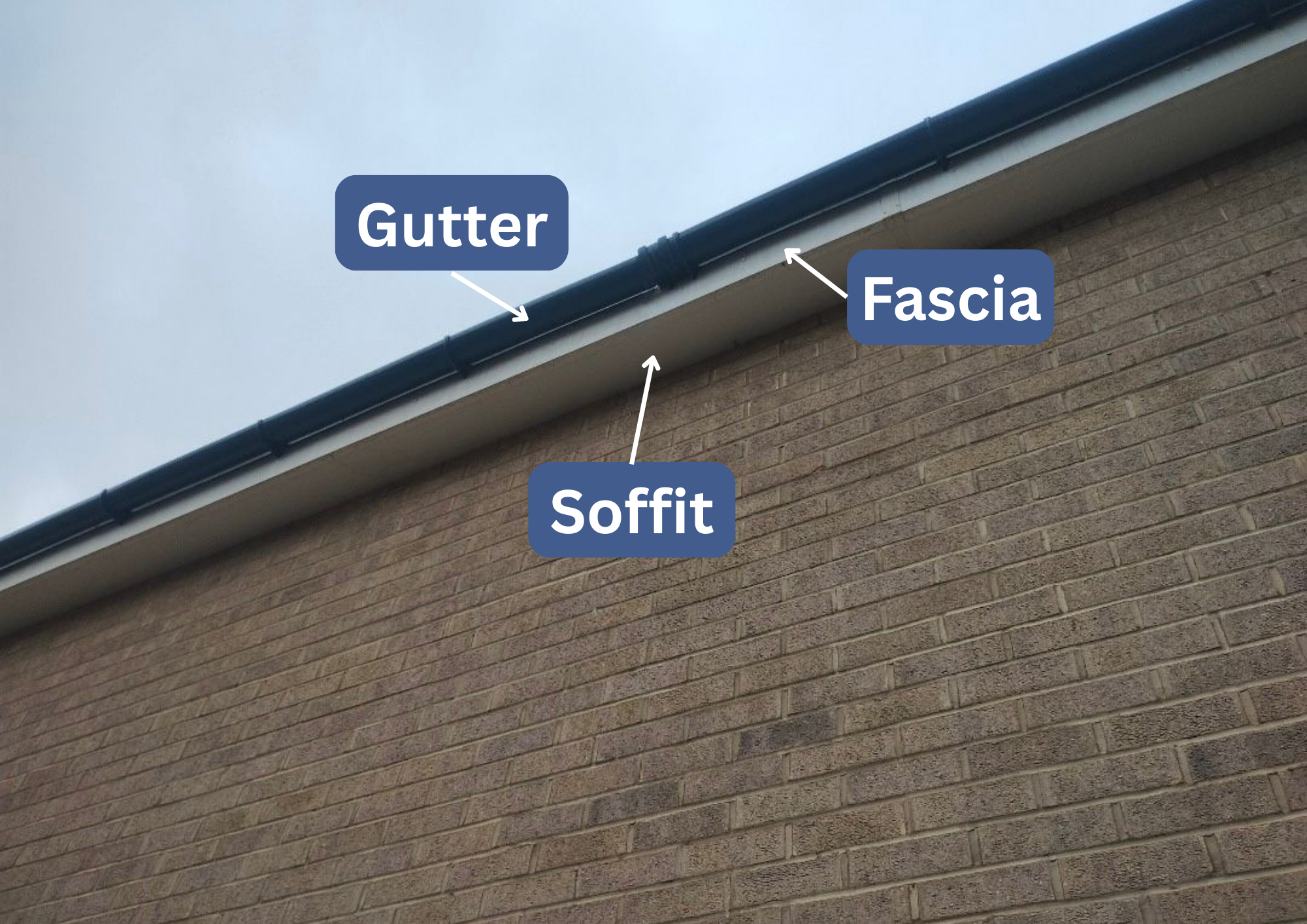
Fascias are horizontal boards fixed to the lower edge of the roof, directly beneath the roof tiles. They run around the perimeter of your property and are clearly visible from the ground.
Their main functions include:
- Supporting the bottom row of roof tiles
- Providing a secure fixing point for guttering
- Shielding roof timbers from rain and wind
Strong, well-maintained fascias are essential for keeping your guttering stable and your roof structure protected.
What Are Soffits?
Soffits are installed underneath the fascia boards, covering the underside of the roof overhang. Although less noticeable than fascias, soffits play a crucial role in maintaining a healthy roof.
Soffits help to:
- Protect roof rafters from weather exposure
- Allow airflow into the roof space to reduce condensation
- Prevent birds, insects, and pests from entering the roof
Proper ventilation through soffits helps reduce the risk of damp, mould, and timber decay.
How Fascias and Soffits Protect Your Home
Together, fascias and soffits form a protective barrier around your roofline. They help direct rainwater into your guttering system and away from the walls and foundations of your property.
When functioning correctly, they:
- Reduce the risk of water ingress and internal damp
- Protect roof timbers from rot
- Improve energy efficiency by supporting ventilation
- Enhance the overall appearance of your home
Neglecting roofline maintenance can result in long-term damage that is costly to repair.
Common Materials Used for Fascias and Soffits
Timber
Timber was traditionally used for fascias and soffits and can still be found on older properties. While visually appealing, timber requires regular painting and is prone to rot and weather damage over time.
uPVC
uPVC is now the most common choice for fascia and soffit installation. It offers excellent durability, requires minimal maintenance, and does not rot or warp. This makes it ideal for the UK climate.
Aluminium and Composite Materials
Aluminium and composite options are less common but offer long-lasting performance and a modern finish. These materials are more expensive but provide excellent resistance to weathering.
Signs of Fascia and Soffit Damage
Fascia and soffit problems often develop gradually, which means damage can go unnoticed until it starts affecting other parts of your home. Spotting the early warning signs can help you avoid more serious and costly repairs.
Common indicators of fascia and soffit damage include:
Peeling paint or flaking surfaces
Paint that bubbles, cracks, or peels is often a sign that moisture is penetrating the material beneath. This is particularly common with timber fascias and soffits, typically indicating the early stages of rot.
Soft, crumbling, or warped boards
If fascia or soffit boards feel soft to the touch or appear misshapen, this suggests water damage and structural weakening. Once timber begins to rot, it will continue to deteriorate unless repaired or replaced.
Sagging or leaking gutters
Gutters are fixed directly to the fascia. If the fascia board is damaged or rotting, it may no longer be able to support the weight of the guttering, leading to sagging, leaks, or gutters pulling away from the property.
Water stains or damp patches on external walls
Faulty fascias or soffits can allow rainwater to escape behind the guttering, resulting in staining, algae growth, or damp patches on the exterior brickwork.
Increased pest activity
Gaps, cracks, or broken sections can allow birds, insects, or rodents to enter the roof space. Nesting pests often cause further damage to insulation and roof timbers.
Poor ventilation and condensation issues
Damaged or blocked soffits can restrict airflow into the roof space, increasing the risk of condensation, mould growth, and timber decay inside the loft.
If you notice any of these signs, a professional inspection is strongly recommended to assess the extent of the damage.
Fascia and Soffit Repair vs. Replacement?
Deciding between repair and replacement depends on the condition of your existing fascias and soffits. While small, isolated issues can sometimes be repaired, more extensive damage often makes replacement the safer and more cost-effective long-term solution.
| Factor | Repair | Replacement |
|---|---|---|
| Extent of damage | Suitable for minor cracks, loose sections, or small areas of rot | Recommended for widespread rot, warping, or structural weakness |
| Cost | Lower upfront cost | Higher initial cost but better long-term value |
| Longevity | Short to medium-term solution | Long-lasting solution, especially with uPVC |
| Maintenance | May require ongoing repairs and repainting | Minimal maintenance, particularly with modern materials |
| Support for guttering | Limited improvement if the underlying structure is weak | Restores full strength and stability for guttering |
| Appearance | May not fully match existing boards | Provides a clean, uniform finish |
In many cases, homeowners choose fascia and soffit replacement to avoid repeated repair costs and ongoing maintenance issues. A professional assessment will confirm whether repair is viable or if replacement will provide better protection and value for money.
Why Fascias Are Essential for Secure Gutters
Guttering systems rely on fascias for stability. Gutters are fixed directly to the fascia board, meaning any weakness can cause them to sag or pull away from the property.
Strong fascias ensure:
- Gutters remain securely fixed
- Rainwater flows efficiently into downpipes
- Reduced risk of overflow and water damage
Fascia and Soffits Replacement & Repair from Sam’s Gutters
If your roofline is showing signs of wear, Sam’s Gutters provides reliable fascia and soffit replacement and repair services tailored to your home.
- Local experts with years of hands-on experience and a strong reputation
- We offer a free home visit to assess your needs and recommend the best solution
- We are confident in the services we provide, which is why all our repair work is backed by a one-year workmanship guarantee
Whether you require minor repairs or full fascia and soffit replacement, our team delivers quality workmanship and honest advice.
Contact Sam’s Gutters today to arrange your free assessment and protect your roofline with confidence.