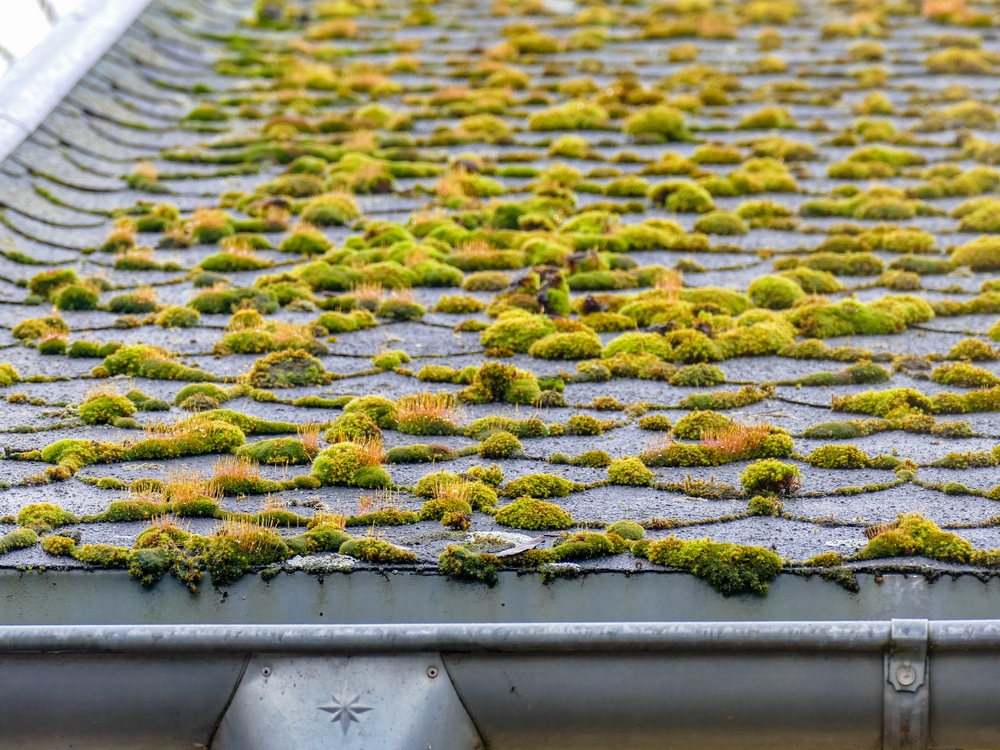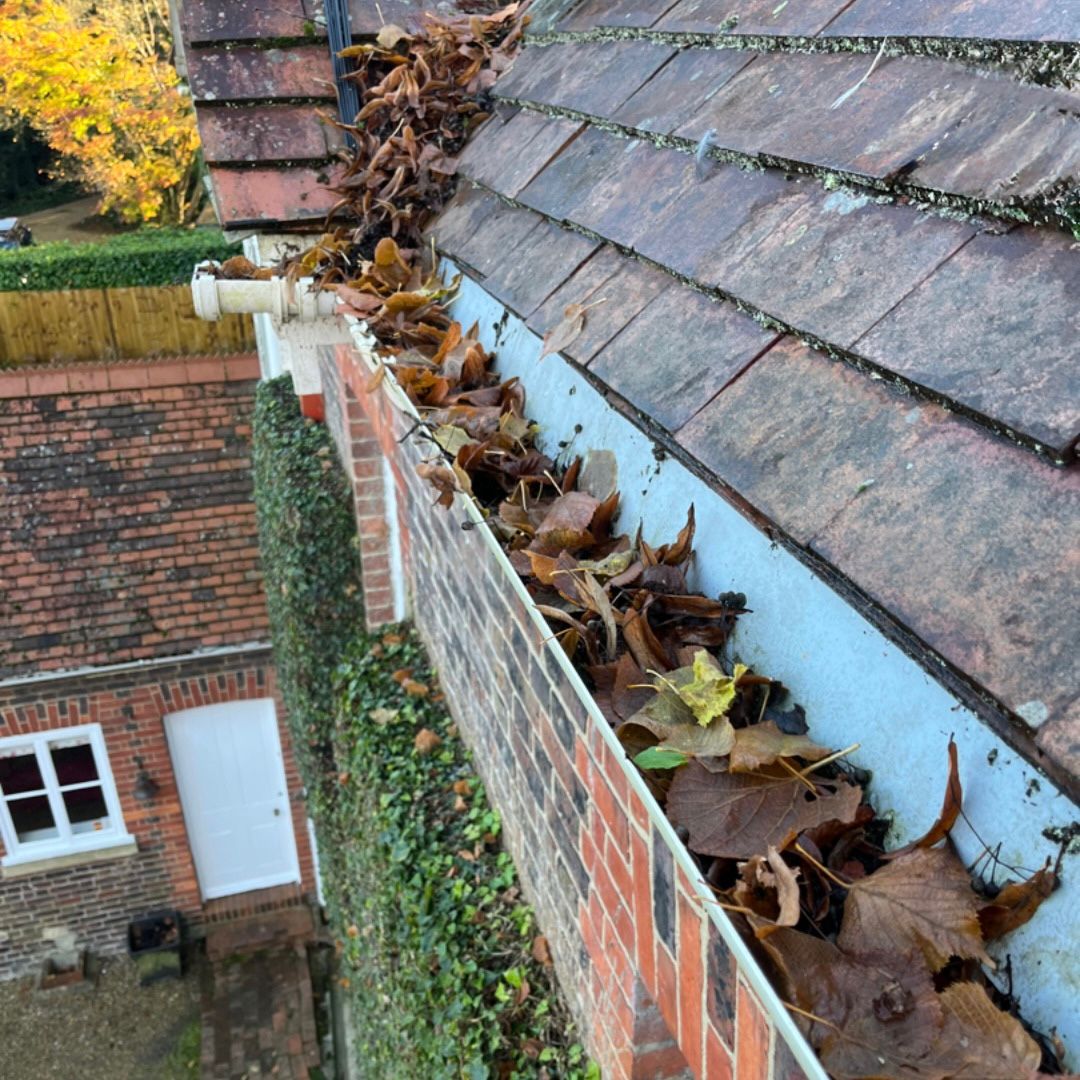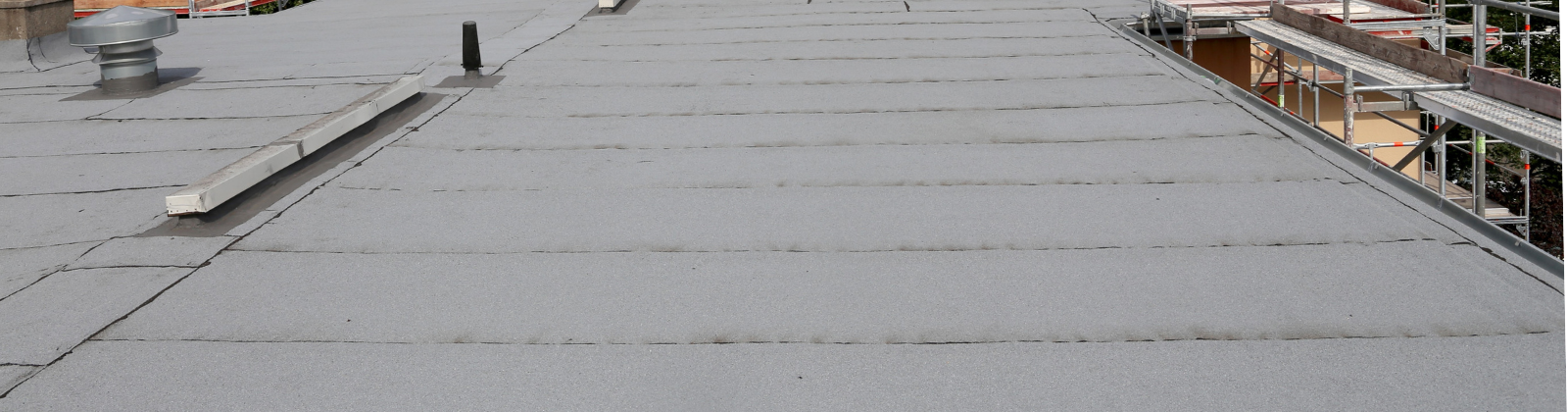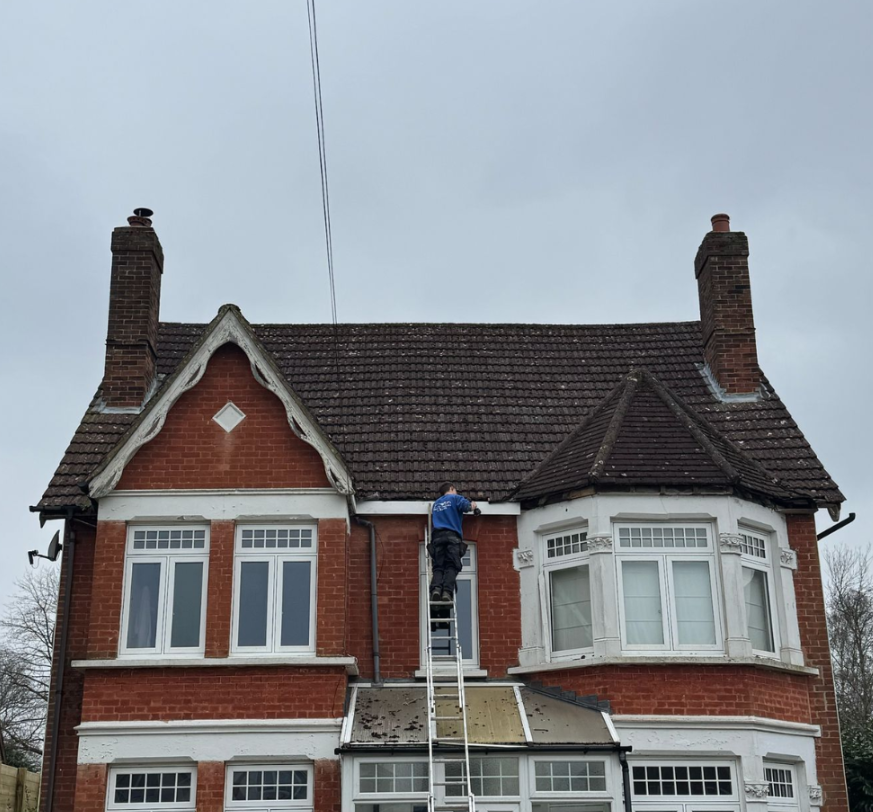
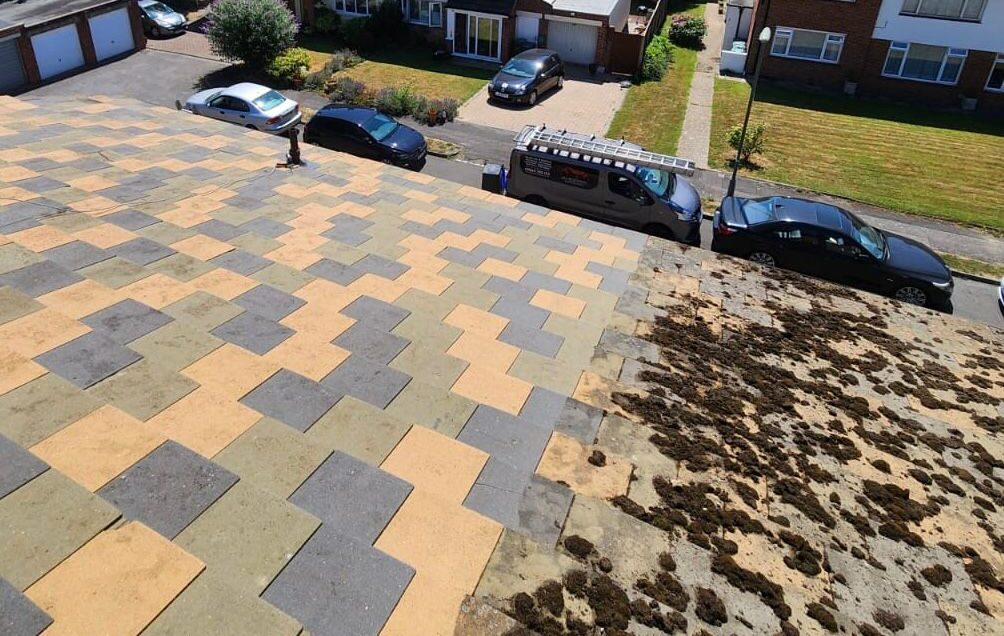
Roofs are constantly exposed to the elements, making them an ideal surface for moss, algae, and lichen to develop over time. While this growth may appear harmless, if left untreated, it can quickly lead to more serious issues, such as water ingress, damage to roof materials, and blocked gutters and drainage systems, shortening the roof’s lifespan.
Hot-water roof cleaning systems offer a modern, eco-friendly, and effective solution. In this article, we explore how hot-water roof cleaning works, features and benefits, and more, before explaining how Sam’s Gutters’ professional-grade hot water pressure washing system achieves reliable and efficient results.
Key Takeaways
- Hot-water roof cleaning uses heated water and steam to safely remove organic growth, providing a deeper, eco-friendly clean compared to cold-water or chemical methods.
- Features and benefits of hot-water roof cleaning include heat and steam-assisted removal of organic matter, improved roof appearance and kerb appeal, adjustable temperature and water pressure, faster and more efficient cleaning, eco-friendly operation, and extended roof lifespan.
- Sam’s Gutters’ professional hot-water system delivers reliable roof cleaning for both residential and commercial properties, providing safe, effective, and long-lasting results.
What Is Hot-Water Roof Cleaning?
Hot-water roof cleaning is a method that uses heated water and steam to safely and effectively remove moss, algae, lichen, and other organic growth from roof surfaces.
Alternate roof cleaning methods include:
- Cold‑Water Pressure Washing: Uses high‑pressure water to dislodge debris, but it can damage tiles, slates, membranes, and fixings and mainly removes surface material rather than deeper buildup.
- Chemical or Biocide‑Based Treatments: Apply chemicals to kill surface growth, but they can take time to work, may need multiple applications, and do not physically remove the material from the roof.
9 Features & Benefits of Hot-Water Roof Cleaning
The following features and benefits demonstrate why hot-water roof cleaning is an effective method for maintaining roofs on residential and commercial properties.
1. High-Temperature, Steam-Assisted Cleaning
Heated water and steam work together to break down and lift organic growth from roof surfaces. This combination of heat and moisture penetrates stubborn growth more effectively than water alone, reducing the need for manual removal, lowering the risk of damage to roof materials, and helping keep gutters and drainage systems clear.
By tackling growth thoroughly, it also slows the rate at which moss and algae return, meaning properties require cleaning less frequently compared to cold-water pressure washing.
2. Enhanced Roof Appearance
Hot-water roof cleaning removes unsightly moss, algae, and lichen, restoring the roof to a clean, well-maintained state. For homeowners, this improves kerb appeal, helping the property look cared-for and potentially supporting its market value.
For businesses, a clean roof contributes to a professional, polished exterior that reflects positively on the company and the property’s brand image. Over time, maintaining a visually clean roof also helps building managers identify potential issues earlier, supporting proactive maintenance and long-term asset care.
3. Controlled Application
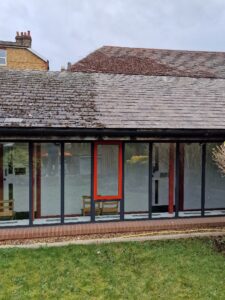
Professional hot-water roof cleaning equipment allows operatives to carefully adjust both temperature and water pressure for each roof type. This ensures that delicate tiles, slates, membranes, and pointing are protected from damage during cleaning.
On commercial properties, this precise control allows teams to work methodically around occupied areas, keeping operations safe and uninterrupted.
4. Quicker Cleaning Process
With hot-water roof cleaning, jobs are often completed faster than cold-water alternatives and within a single visit. Conversely, cold-water methods generally require more intensive effort and repeated visits. This efficiency lowers labour time and costs for homeowners, landlords, and facilities managers.
For companies, it also minimises the impact on daily operations, ensuring that business activities or tenant access are not disrupted while maintenance is carried out.
5. Eco-Friendly Roof Cleaning
Hot-water roof cleaning relies on heat and water rather than harsh chemicals, making it a safe and environmentally responsible method. Being chemical-free, it avoids the risk of harming surrounding plants, wildlife, or sensitive drainage systems, making it perfectly suited to environmentally sensitive sites.
This approach also protects surfaces around the property from chemical residue and reduces potential exposure for residents, staff, or maintenance teams. By using natural cleaning power rather than biocides, it offers a sustainable alternative that aligns with modern environmental standards while delivering a thorough and more effective roof clean.
6. Extended Roof Lifespan
By removing organic growth, hot-water roof cleaning prevents moisture from being trapped on the roof surface, which can lead to rot, cracking, or leaks over time. This proactive approach reduces the risk of water-related damage and premature deterioration, helping to maintain a safe, reliable roof for longer.
7. Improved Drainage & Gutter Performance
Hot-water roof cleaning removes organic growth thoroughly, including the stubborn residue that can contribute to blocked gutters. By cleaning the roof more effectively, it helps keep drainage systems clearer for longer, lowering the risk of water build-up and potential damage to walls, foundations, and roof edges.
Did You Know? Sam’s Gutters also offers gutter cleaning in London.
8. Versatile Across Roof & Property Types
Hot-water roof cleaning can be adapted for a wide range of roofing materials, including tiles, slates, and even some historic or delicate surfaces. This flexibility means the method can be safely applied to both small domestic homes and large commercial buildings without causing thermal shock or compromising roof integrity.
Hot-water roof cleaning also supports long-term asset protection by providing a reliable method that works regardless of roof design, material, or scale.
9. Dependable in Varied Conditions
Professional hot-water roof cleaning equipment can operate from a mains water supply or a water tank, making it suitable for a wide range of properties, including those in remote or hard-to-access locations. This flexibility ensures that even roofs without easy access to water can be cleaned safely and effectively.
The ability to adapt to different conditions makes hot-water cleaning a dependable choice, regardless of property location or site constraints.
How Do I Know if My Roof Needs Cleaning?
If you notice any of the following signs, it may be time to arrange professional roof cleaning:
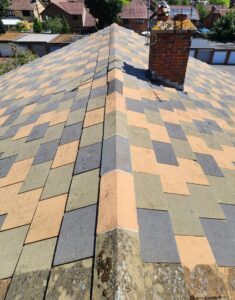
- Visible moss, algae, or lichen growth: Patches of green, black, or grey growth on the roof indicate that organic material is taking hold, which can trap moisture and accelerate roof wear.
- Dark staining or discolouration on tiles or membranes: Streaks or dark patches suggest surface staining caused by algae or other growth, affecting both appearance and potentially roof performance over time.
- Gutters frequently blocking or overflowing: Regular blockages may indicate that moss and debris from the roof are accumulating in gutters, increasing the risk of water damage to the building’s exterior and foundations.
- Water marks or damp patches on external walls: Signs of moisture on walls may suggest water isn’t draining properly from the roof, potentially due to organic growth or blocked channels.
- Debris building up in roof valleys: Leaves, twigs, or moss collecting in the valleys between roof sections can block water flow and increase the chance of leaks or water pooling.
- Organic material falling onto paths, driveways, or gardens: Moss or other growth shedding from the roof can create slippery surfaces below and indicate that cleaning is needed to prevent further spread.
- Roof looks uneven, untidy, or poorly maintained: Uneven surfaces, lifted tiles, or general untidiness can signal that growth or debris is affecting the roof’s condition and warrant a professional clean.
When Is a Good Time to Get My Roof Cleaned?
The table below highlights the optimal periods for roof cleaning and the practical benefits each offers:
| Timing | Why It Matters | Key Benefits |
|---|---|---|
| Spring / Early Summer | After winter, roofs often carry the heaviest moss, algae, and debris build-up. Mild weather also makes cleaning safer and easier. | Removes winter moisture and prepares the roof for warmer months. |
| Late Summer / Early Autumn | Drier conditions mean the roof dries quickly after cleaning. | Helps prevent moss and algae growth from getting worse during wet months, maintains roof condition, and reduces future maintenance needs. |
| Before Selling or Valuing a Property | A clean roof improves first impressions and signals that the property has been well-maintained. | Enhances kerb appeal, supports better marketing photos, reassures buyers, and can make the property more attractive in a competitive market. |
Also read: Practical Tips to Protect Your Gutters for Winter
Sam’s Gutters: Professional Hot-Water Roof Cleaning Service
The quality of roof cleaning depends heavily on the equipment used. Professional hot-water systems deliver safer, more effective, and longer-lasting results than standard domestic washers or cold-water methods.
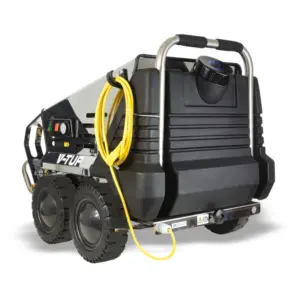
At Sam’s Gutters, providing expert roof cleaning in London, we have invested in a professional-grade hot-water pressure washing system. This advanced equipment breaks down dirt, organic growth, and environmental staining far more effectively than cold-water systems, achieving a deeper, longer-lasting clean for both residential and commercial properties.

Key advantages of this service include:
- No Site Visit Required: Get a quote over the phone, saving time and simplifying the process.
- Minimal Disruption: Cleaning can be carried out without interfering with your daily routine, whether at home or on a commercial site.
- Efficient Cleaning: Hot-water cleaning often reduces overall cleaning time by around a third compared to cold-water methods.
- Chemical-Free Operation: Thoroughly removes organic growth without harsh chemicals, protecting the environment, plants, and surrounding surfaces.
- Flexible Water Supply: Operates from a mains connection or water tank, making it ideal for properties with limited or difficult access.
- Safe, Ground-Based Method: Ground-based operation means roofs can be cleaned without stepping on them, reducing the risk of damage and keeping occupants safe.
Sam’s Gutters offers roof and gutter services in London and the South East. Get in touch with us today and book your hot-water roof cleaning to restore your roof’s performance, protect your property, and ensure lasting results.